Scroll

The Bailey Lab
Scott Bailey’s lab studies the molecular mechanisms that cells use to interact with and modify DNA and RNA, with a focus on CRISPR systems. Our recent work has provided structural and mechanistic insight into how CRISPR-Cas systems identify and destroy their DNA targets.


Posts
Posts

Bailey lab PhD student Morgan Beckett won the Biochemistry and Molecular Biology Department’s 2022 Sharon Krag Award for outstanding and impactful leadership!


The Bailey lab wishes Katelyn Jackson a fond farewell as she heads to St. Jude Children’s Research Hospital to start a postdoctoral fellowship in Richard Kriwacki’s lab.

The newest member of the Bailey lab is Zoë Hutchinson, a PhD student in the Molecular Biophysics program.

First-year Biochemistry and Molecular Biology ScM student Brynn Durecki has joined the Bailey lab!

CRISPR systems are far more diverse than just the Type II CRISPR-Cas9 systems. They vary in their components, what types of nucleic acids they target, and more. Our CRISPR Primer’s newest page compares and contrasts key aspects of the most common types of CRISPR systems: Type I, Type II and Type III.
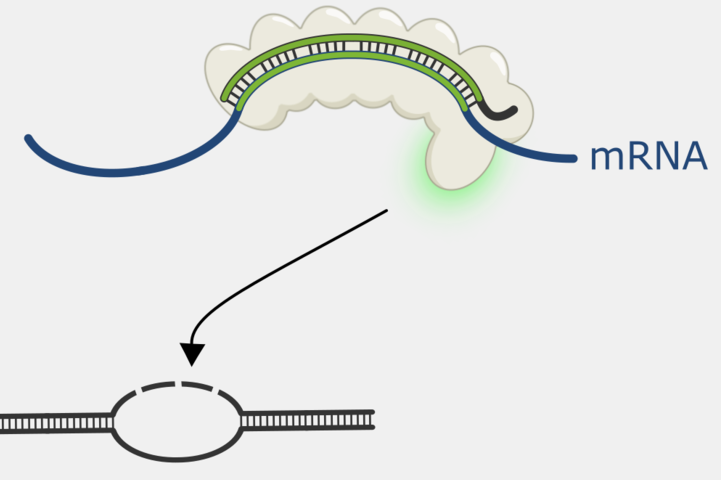
Type III CRISPR systems are unusual in part because they have multiple mechanisms for cleaving nucleic acids, and target both RNA and DNA, but the latter only in a transcription-dependent matter. A 2016 paper from the Bailey lab in Genes and Development filled in key pieces of the puzzle about Type III systems, helping to clarify two major questions: What are the specific RNA and DNA targets of Type III complex? And what mechanisms control and coordinate the RNA and DNA cleavage activities?

In 2014, three labs completed structures of different versions of the Cascade complex, in three papers published at the same time – including one led by Sabin Mulepati, a then-PhD student in the Bailey lab. Sabin used x-ray crystallography to determine the structure of Cascade bound to a single strand of target DNA that matched the Cascade crRNA, to a resolution of 3 angstroms.

First-year Biochemistry and Molecular Biology PhD student Elvar Bjarkason has joined the Bailey lab! Elvar did his ScM research in the Bailey lab in 2019-2020, studying how Type I CRISPR systems respond to mutations in target sequences.

Our CRISPR Primer now covers Type II CRISPR systems!
When we launched our CRISPR Primer last fall we focused on Type I and III systems, the subject of much of our lab’s current research. For our first expansion of the Primer, we’ve added information about Type II systems, also known as CRISPR-Cas9 systems.

In the news you might only hear about CRISPR-Cas9, but there are actually several types of CRISPR systems – and the most common are Type I systems, defined by the cas3 gene. In 2011, Sabin Mulepati, then a PhD student, and Scott Bailey were used x-ray crystallography and biochemical analysis to characterize the HD domain of the Thermus thermophilus Cas3 – read on to learn what they found out.
